Beatitudes: An Overall Look
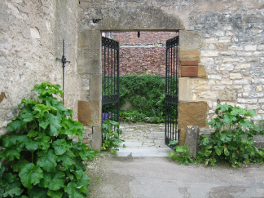
The door is right here
And the gate is wide open.
We are free to choose.
HAIKU
I began this series of blogs on the beatitudes with a sense of adventure: what might I discover in each one individually. Now I turn to consider what have I discovered when taking them altogether? Are there common themes or threads that weave throughout? What has surprised; what rings true? As you have journeyed with me through these beatitudes, perhaps you have wondered about these or your own questions. In many ways there is more than I can touch on in one final blog, but I can lift up some of the key themes that have emerged for me.
Counter Cultural
Taken together, I have found the beatitudes to be profoundly counter cultural and, because of that, counter intuitive. As I was writing about them, I initially found myself alternately shocked, puzzled, and/or resistant to the message of many of them, particularly to the “blessed” part of such things as poverty, hunger, mourning, persecution. Perhaps they were meant to shock, while at the same time convey deep truths that run counter to accepted norms and experience. Deep truth often stands outside our usual way of thinking, outside the norms of the culture, and that is especially true today with the individualistic consumer culture in which we now live — a culture that places supreme value on maximizing one’s own personal gratification (even for “good” things).
In contrast, the beatitudes value such things as community, mutual dependence, service, singleness of purpose in relationship to the divine, and the sacrifice of love. While these values may be held up with appreciation by many, in reality they are most often set aside in favor of the self-oriented goals of comfort, security, possessions, power, and personal pleasures. As a consequence, when the values of the beatitudes are put into concrete practice, people and institutions resist.
Journey Into the Kingdom of God
What, then, is the fundamental perspective upon which the beatitudes rest? This perspective I came to see, as I read the beatitudes and commentaries on them, is that the beatitudes are a roadmap of the journey into the depths of the what the scriptures call the kingdom of God (which might also be named the commonwealth of God). Clarence Jordan articulates this perspective, with “blessed are the poor” as the starting point on this inward journey, and “blessed are the persecuted for right action” as the culmination. I’m not sure I see these (as Jordon does) as an ordered set of steps that unfold in a linear way. But I can understand them as key landmarks in the terrain of the “commonwealth” that we may encounter at any time and in any order, over and over again, perhaps at a greater depth of understanding each time we arrive. My own entry point for this journey has been hunger and thirst — for God rather than for food and drink. Meekness and peacemaking are familiar places for me in the terrain, mourning not so much. I’ve not yet encountered persecution for right action (other than in my efforts to avoid it!), though so many others have and are experiencing the forces of such persecution.
Egolessness
A key transformation that needs to happen on this journey is to set aside an exclusive or even primary focus on one’s own self, in the sense of egoic self-interest. To be poor, especially the inner poverty of poor in spirit, is to not be “full of oneself” and is to recognize one’s ultimate dependencies and connectedness with everyone, with God and with all creation. This opens us to the virtue of humility, in which our True Self (in contrast to the ego-self) is found in recognizing the giftedness of life and our small (yet significant) place in the large picture of creation. Similarly, the blessedness of mourning is to discover that even when stripped of those things or persons that have meant so much to us, there is yet life and joy and love at a deeper level that sustains us in any situation. The more the ego-in-charge diminishes, the more room there is for the emergence of the True Self that receives openly, gives generously, and walks in constant gratitude and love.
Deep Wisdom
As I explored each beatitude in turn, their counter-intuitive nature kept hitting me. What is so blessed about poverty, mourning, hunger, meekness, and so on. Yet in each case a deeper meaning emerged with further exploration. I have grown to appreciate paradox as often being an indicator of Divine presence and action. So often something deeper resolves the paradox and unites the seeming opposites in a greater truth. The blessing of hunger and thirst is to discover what is of deepest importance; the blessing of meekness is the gift of leaning into trust in the Divine source, and greater self-knowledge; the blessing of persecution is recognizing that one is “on the right track.” These blessings do not eliminate the culturally defined “negatives,” but run deeper and redeem them in some life-giving and life-sustaining way.
Wisdom comes into focus especially in the beatitude about purity of heart. The purer our hearts are in orientation toward God — the more single, and the less diluted — the greater our capacity to “see” God and tap into the deep wisdom that is of God. And that wisdom comes more and more to guide our actions toward virtues such as goodness, truth, and beauty.
The Real and the Really Real
Deeper still is the expansion of what we know and understand as fundamental reality. We live in a world that presents itself to us mostly as physical reality — a world of things and energy existing in space and time. This is our normal “real” within which we learn, grow, act, and are acted upon. Materialist philosophies assert that this is all there is to existence. Yet all spiritual traditions recognize that this real world is held within a container of a spiritual cosmos that is beyond time and space, beyond things and energy, even as it manifests and expresses itself in these material ways. In this spiritual universe the really real (or the “Real”) is grounded in Love, in relationship and connectedness toward well-being, in beauty, in goodness, in virtues like humility, trust, hope, and wisdom.
Each of the beatitudes points us toward the Real in this sense. And it is in this Real that the paradoxes of “blessed are those who mourn,” for example, find resolution. Perhaps it is paradox itself that we are urged, even compelled, to wrestle with until we arrive at a hint of or opening to the deep wisdom that is the Real.
Community of Love
At the deepest level, the “kingdom,” or commonwealth, of God is a community of Love. Each beatitude is a marker or milepost along the way of deepening into this community. The commonwealth of God is the expression of the “really Real”; it is its manifestation in the world in which we live. The egolessness toward which we journey is an opening into connection with God, neighbor, and all creation. All of this tells us that the central thread of the beatitudes is the building of a community of love. This community is the Center, the place of fullness of life, and the ground of our true being. It is summed up in the great commandment of Jesus, “you are to love God with all you’ve got, and love your neighbor as you love yourself” (my paraphrase).
Poverty of spirit shows us we don’t stand alone, but lean on the grace of God who is love, given directly or through others. In mourning we experience losses from community, yet also are lovingly held and comforted by the rest of the community, including God. Meekness is the place of knowing ourselves accurately and deeply as beings created by and capable of trusting in the Creator. Our hunger and thirst are ultimately for this unnamable mystery, this ground of our being; we are filled only when we dwell in this mystery and it dwells in us. Mercy is our way of living out this membership in the community of love. Purity of heart is seeing that love and only love is at the heart of all reality, and finding the divine beauty, goodness, and truth through that. Peacemaking is another response we make out of our recognition of the ultimate value of the community of love; it is our way of fostering it through our actions. And when the world that is not yet fully there, not yet an all-encompassing community of love, when it pushes back and we find ourselves persecuted, we can take consolation that it is a sign that we are on the right track.
What is Meant by “Blessing”?
These beatitudes are all presented as blessings. And we have explored what this blessing may be when so many of the beatitudes deal with states we normally think of as negative. By and large, the blessing is not the elimination of the negative state and restoration to some more pleasant or materially comfortable life. Poverty is real when we experience it. Mourning comes upon us and what is lost is not restored. Persecution is painful, even deadly.
The blessing lies deeper. It is grounded in the deep stream of love that flows beneath all of life and brings it to fullness even in loss. It is participation in the community of love that holds us in all circumstances. It is the state that allows us to “give thanks in all circumstances,” because we possess the really Real within us. It is a state of deep joy, peace, courage, and integrity. The blessing is in living more and more fully into who each of us is created to be.
Freedom to Choose
As humans we have the great gift of inner freedom — the freedom to choose what is good, beautiful, and true, what serves love and community formation; or the freedom to choose the opposites. Therein lies the great risk of this gift. To be fully free, we must also be free to choose what undermines life well as to choose what sustains and expands it. Far too often we (individually, and even more, collectively) choose the former. The choice for goodness is seldom the easiest choice in the moment, and often involves sacrifice, especially of what the ego wants. The beatitudes remind us of these choices and direct us toward the better way.
Pause and Reflect
o What have been the key threads for you that you have discovered in journeying with me through the beatitudes?
o Which of these beatitudes have you most deeply experienced, and which not so much?
o If you were to put one of these beatitudes (or all of them!) in your own words, how would you express them?
o From your own experience what new beatitude can you imagine being added to this list?
Conclusion
The beatitudes are often described as the core of Jesus’ teaching. As such they continue to be a challenge to us personally and as a society. We hold them up as ideals but largely ignore them in practice. Yet they are timeless guides to the journey toward true life and practice — the egoless way, deeper wisdom, focusing on what is most Real, ultimately based on the law of love. They are hard, yet life giving and in this giving of true life lies their deep blessing. The doorway into the “kingdom” is before us. The gate is wide open. We are free to choose life of death; let us choose life!
Copyright Hearken Books.
Unauthorized use and/or duplication of this material without written permission from Hearken Books is strictly prohibited.